On 7–8 October 2026, the fourteen partners of the MultiRoofs project gathered in Mechelen, Belgium, for their fourth consortium meeting. With Work Package 2 (WP2) underway since July, the meeting marked a key step towards testing digital tools and implementing local pilot projects.
Over two days, the partners participated in technical demonstrations, hands-on workshops, and collaborative discussions on pilot activities, budgets, and citizen participation, all with a common goal: to unlock the potential of urban rooftops across Europe.
Day 1: Exploring and testing the MultiRoofs digital tools
The first day focused on the digital tools developed within MultiRoofs and how they can support local authorities in identifying and unlocking rooftop potential.
Introducing the MultiRoofs toolbox
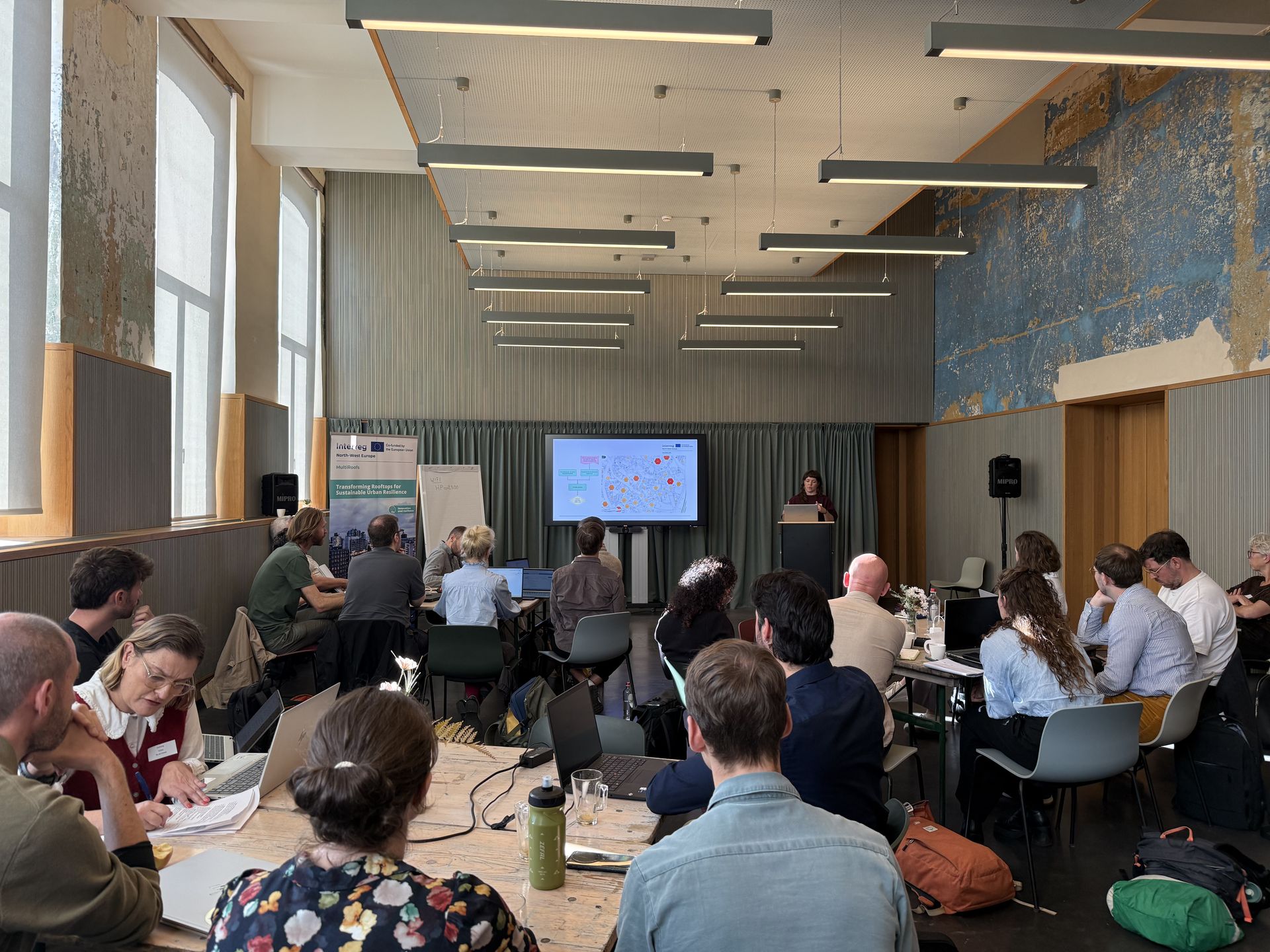
Technical partners TU Delft, Rooftop Revolution and MVRDV introduced the different tools being developed as part of the project. Rather than a single platform, MultiRoofs offers a series of interconnected tools designed to help cities analyse rooftop characteristics, visualise their potential and explore different uses, from solar energy production to green spaces and water management.
Connecting the tools to local needs
Through a series of presentations, each local authority (Brussels, Dublin, Île-de-France, Mannheim, Mechelen and Rotterdam) shared their pilot projects, local challenges and expectations for the tools.
While each city faces different urban challenges, several common priorities emerged: Local authorities want to understand why a particular rooftop use is recommended, based on clear criteria and reliable data, while being able to identify where information is missing. They also stressed that the tools should help identify rooftop opportunities without replacing the need for design studies. Finally, being able to export results for further analysis was highlighted as an important feature to support local planning decisions.
Putting the tools to the test
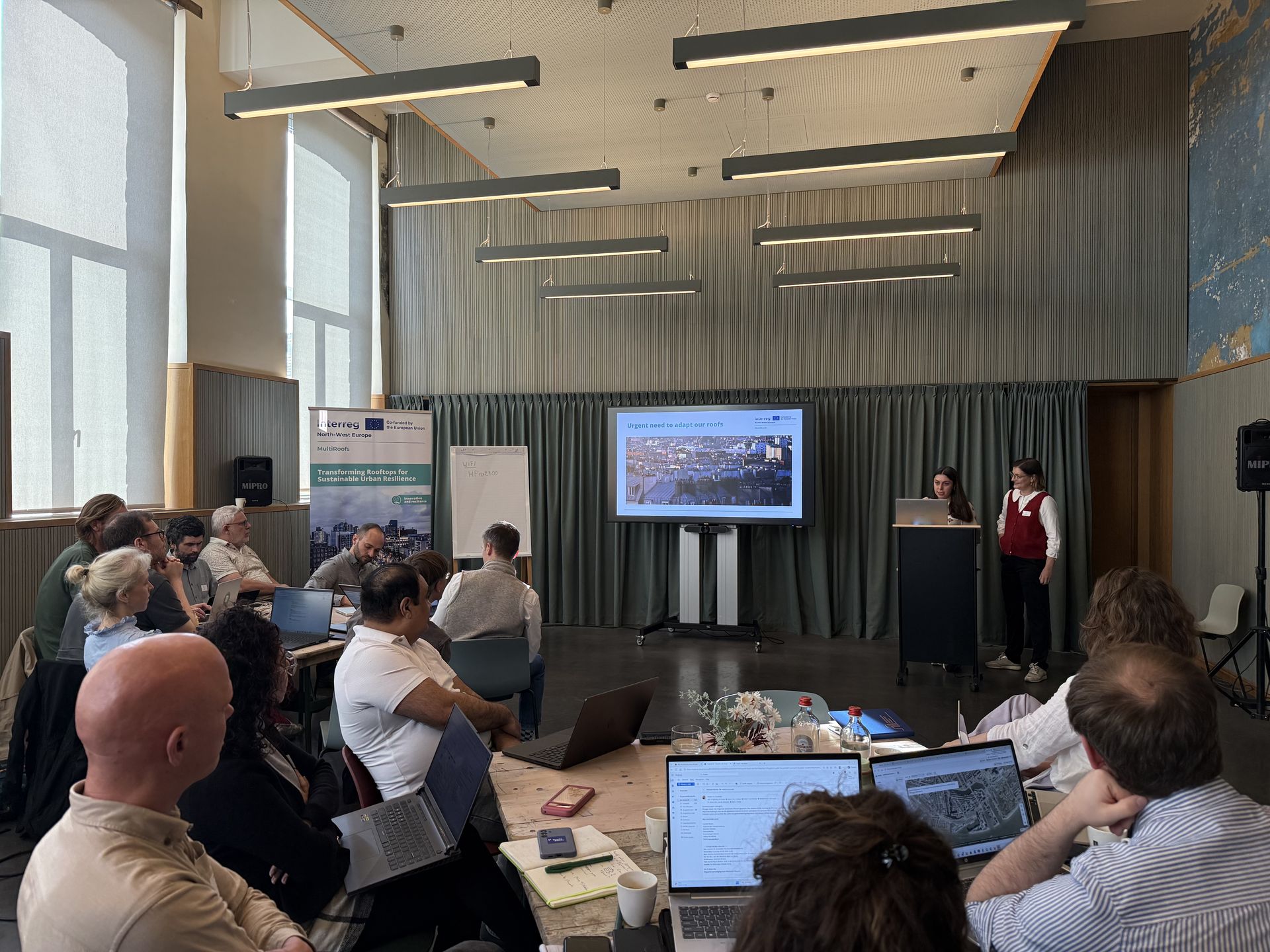
In the afternoon, local authorities joined technical experts for two hands-on workshops.
The first focused on testing the tools with real urban datasets, identifying technical challenges and opportunities for improvement. The second explored how the tools could better support local pilot projects, particularly by integrating urban priorities, regulatory constraints and different rooftop scenarios.
These exchanges provided valuable feedback to guide the next stages of the tool development and ensure that the MultiRoofs toolbox responds to the practical needs of European cities.
Day 2: Strengthening collaboration and exploring citizen participation
The second day focused on how partners can work together more effectively, share knowledge and involve local communities in the transformation of urban rooftops.
Sharing knowledge and learning together
The day began with a communication update from FARI, highlighting the project's collaborative approach to communication, recently recognised as a good practice at an Interreg North-West Europe workshop.
This was followed by a Reflexive Monitoring in Action (RMA) session, led by Rooftop Revolution and Rotterdam, where partners reflected on their roles and explored how to strengthen collaboration and share lessons across pilot projects.
Building on these discussions, partners also exchanged views on project budgets, workloads and available resources, exploring how to make the most of their expertise and networks to support the implementation of local pilots.
Bringing different perspectives to rooftop transformation
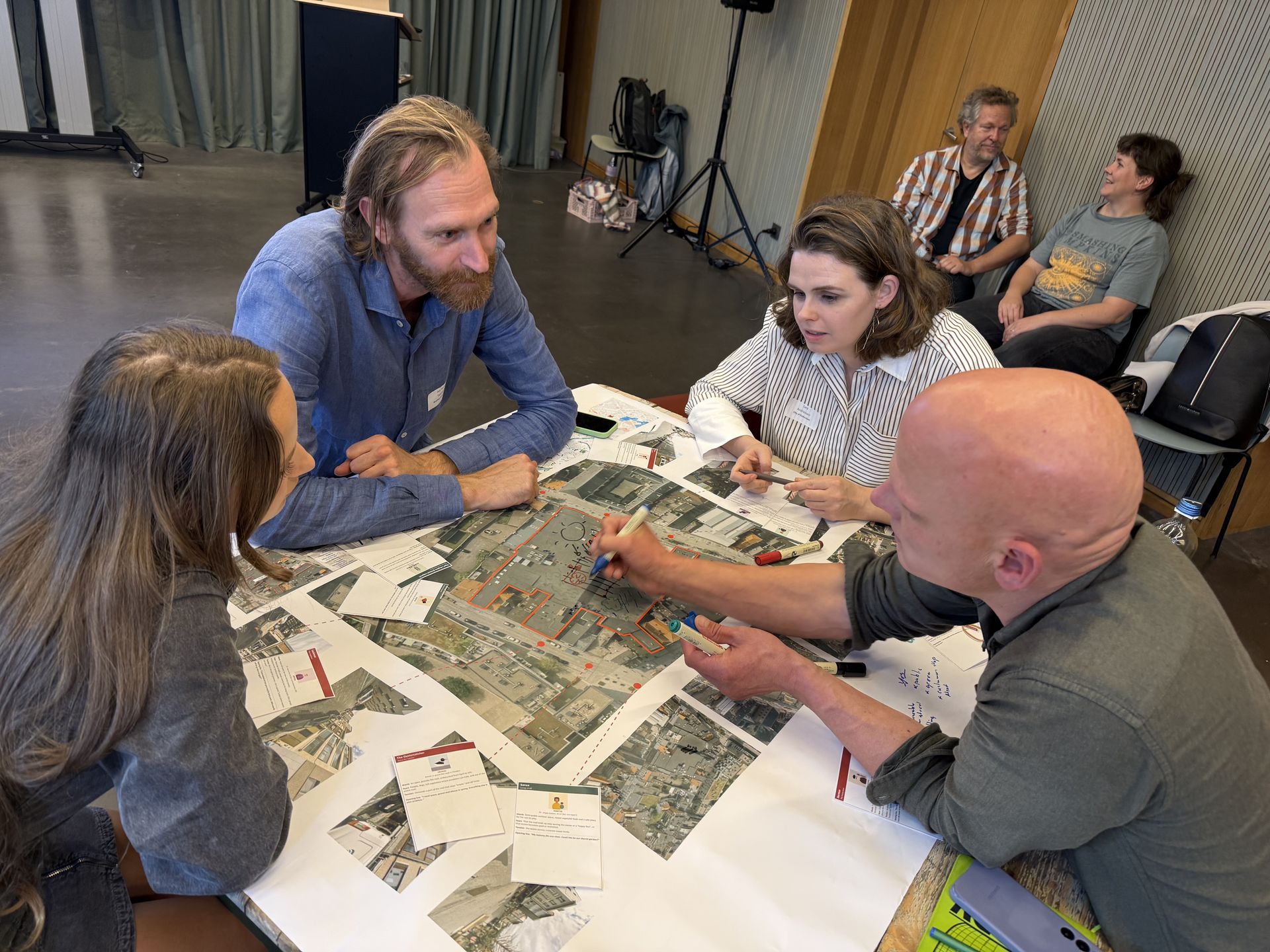
The day concluded with a participatory workshop organised by Mechelen, using a real rooftop in the city's historic centre as a case study.
Working in groups, partners explored how a 3,800 m² rooftop could combine different functions, including water retention, green spaces and areas for community use. Through role-playing exercises, the goal was to consider the perspectives of building owners, residents and other stakeholders, each with different needs and expectations.
The workshop highlighted the importance of bringing different interests together to develop rooftop solutions that are not only technically feasible but also respond to the needs of local communities.